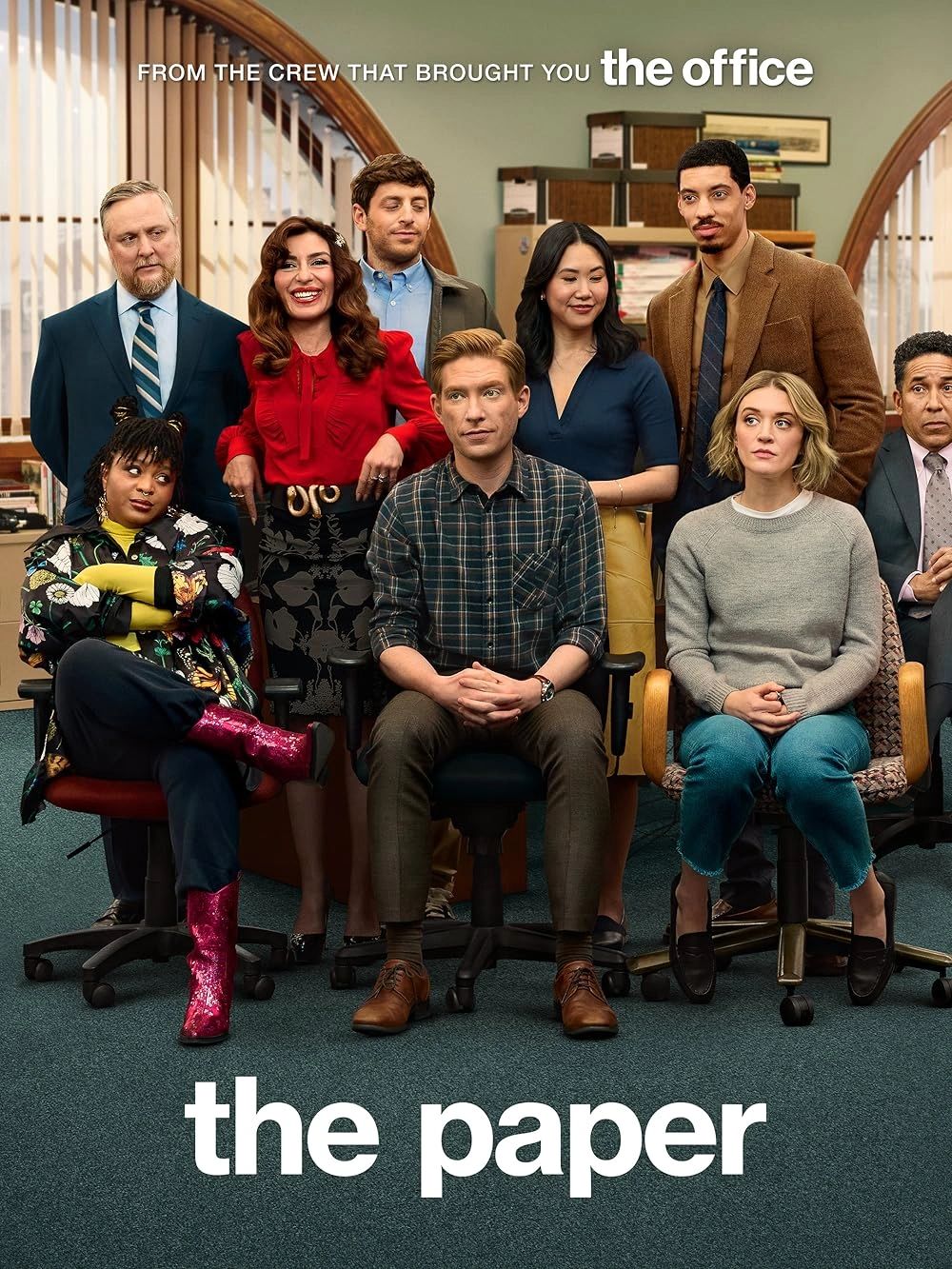
The Paper succeeds where most reboots stumble. It understands how to grow without losing what made the original resonate. The show captures the drab rhythm of office life, the kind of fluorescent monotony that makes people weirdly loyal to their coworkers, and reframes it in a modern newsroom. It is still about paper, but now it is about what happens when the people behind it are fighting to stay relevant in a digital world.
It is funny, sometimes quiet, and more grounded than its predecessor. The Toledo Truth Teller is not glamorous, but it has heart. And in that mix of old-school integrity and new-world anxiety, The Paper finds its voice.
Oscar’s return anchors the series beautifully. He is still understated and sharp, the calm within the chaos. His arts column gives him just enough texture to stand apart while reminding you why he was always the voice of reason. Ned Sampson carries much of the emotional weight. He is flawed but human, often too passionate for his own good. His dynamic with Mare Pritti becomes the show’s emotional core. Together they build something genuine, bonded not just by attraction but by a shared devotion to local journalism. Their connection feels earned, not scripted, which gives the show its warmth and sincerity.
Esmeralda Grand, head of TTT Online, embodies ambition pushed too far. She is sharp and driven but self-centered in a way that keeps her from being likable. Her choices hurt people who care about the work itself, and while she is a necessary contrast to Ned’s idealism, she lacks depth. There is potential for redemption, but for now she remains the show’s weakest link. Ken Davies, the British corporate strategist, adds levity to that tension. He is pompous, clueless, and charming in a way that makes every scene with him hum. His corporate absurdity provides comic relief without undercutting the story’s heart.
Detrick Moore and Nicole Lee are quietly endearing. Their awkward relationship gives the show a believable romantic subplot that does not feel forced. They are simply two people trying to make sense of their jobs and each other. Adam Cooper offers comic relief through his strange blend of obliviousness and good intentions. His co-worker, Adelola Olofin, grounds him with her quiet rationality, serving as the steady voice in a workplace that thrives on chaos.
Then there is Travis Bienlien, the true standout. He is strange, sincere, and utterly committed to his work. In his mind, every decision he makes serves the noble mission of journalism. His conviction is both ridiculous and inspiring, and that is what makes him so compelling. Travis is funny not because he is trying to be, but because he believes so deeply in what he does.
The Paper does not rush. It does not beg to be binged. Instead, it moves at a deliberate pace that lets its characters breathe. The humor comes from personalities and moments, not punchlines. Sometimes it leans into the absurd, but it never loses its footing. The balance between sincerity and awkwardness feels intentional, almost reflective of how real workplaces actually are. If there is one flaw, it is Esmeralda’s lack of dimension. She is compelling but too one-note, a character built more from conflict than complexity. Yet even that does not derail what works so well.
By the time the season ends, The Paper leaves you wanting more. It builds a world that feels real, full of people who are imperfect but trying. It reminds us that journalism, even in its smallest form, still matters. This is not a satire about work; it is a story about purpose. It is a grounded, modern take on the office comedy that respects where it came from while building something new. It is warm, funny, quietly sharp, and sincere enough to make you care about the people who care about the paper. The Paper does not chase spectacle. It chases truth. And that is exactly why it works.