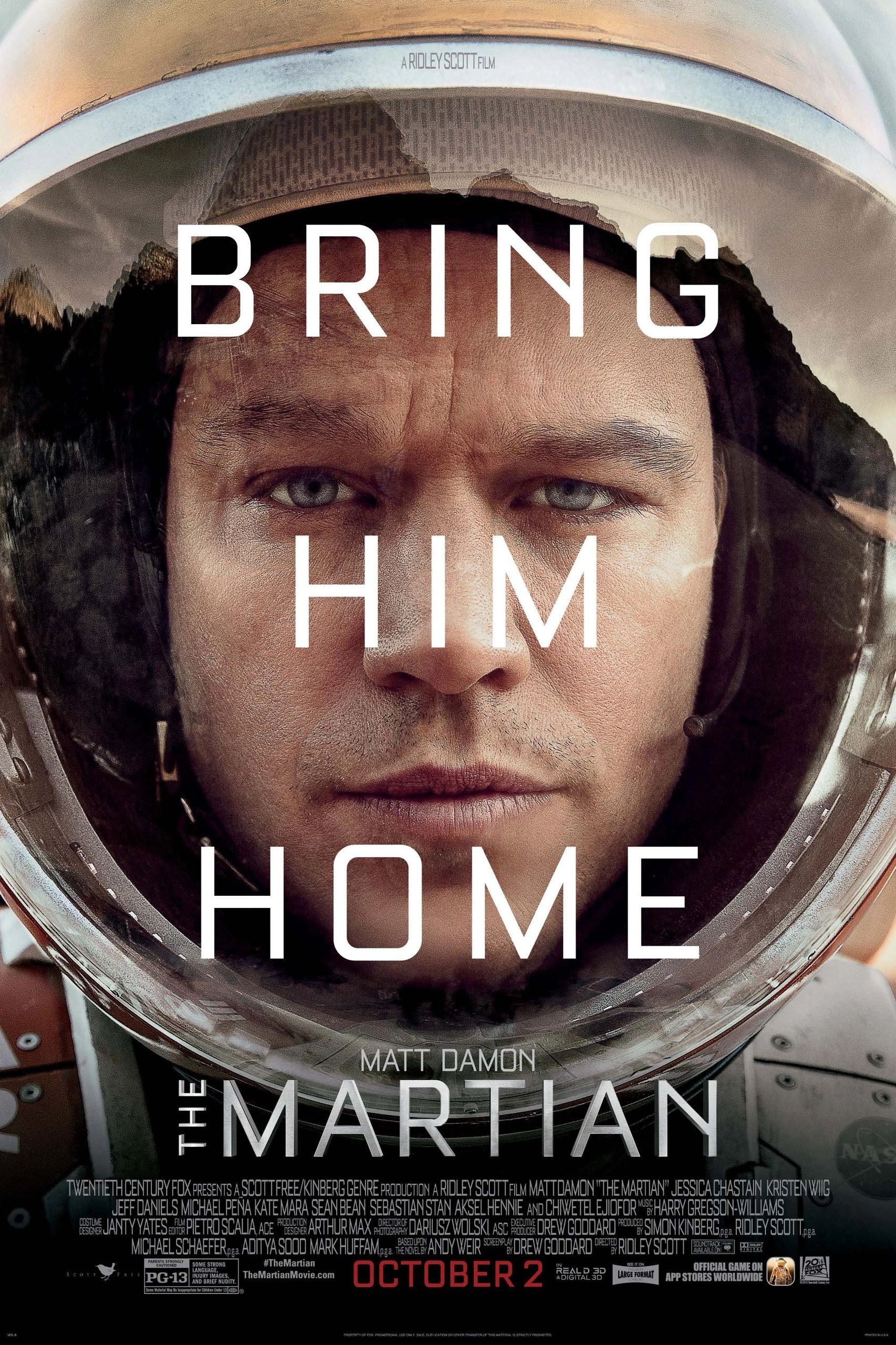
I had heard that The Martian was a great book, so I finally decided to watch the movie adaptation, The Martian, to see what all the hype was about. It’s one of those movies people constantly recommend, and after watching it, you understand why, even if it’s not for the exact reasons you might expect.
At its core, this isn’t just a survival movie. It’s a problem-solving movie disguised as one. And that distinction matters.
The first thing people usually point to is Matt Damon, and to be fair, he’s good. He’s got to carry a lot of the film on his own, and he does it in a way that feels natural. But it never feels like some unbelievable, career-defining performance that’s doing all the heavy lifting. Instead, he fits into the movie more than he defines it. The real strength comes from everything happening around him, the structure, the pacing, and the way the story unfolds.
What really makes the movie work is its tone. You’ve got a character stranded on Mars, completely alone, facing what should feel like inevitable death, and yet the movie never sinks into despair. Instead, it leans into humor in a way that actually makes the situation feel more real. When someone is pushed that far, staying positive isn’t just a personality trait, it’s a survival mechanism. The humor doesn’t take away from the stakes, it reinforces the humanity of it all. You’re not watching a hero, you’re watching someone figure it out day by day, trying to stay sane.
That same grounded feeling carries into the science. The film doesn’t try to overwhelm you with technical detail, but it gives you just enough to believe in what’s happening. Every solution feels earned, even if you know it’s been simplified from the source material. It respects the audience enough to show the logic without getting lost in it, which is a tough balance to strike and one it handles really well.
There’s also a very clear rhythm to the movie. Problem shows up, he works through it, finds a solution, then something else goes wrong. Over and over. On paper, that sounds like it could get repetitive, and at times you can feel that structure, but it’s also what keeps the movie engaging. Each challenge builds on the last, and you find yourself locked into that cycle, waiting to see how he’s going to get out of the next situation.
Visually, Mars does a lot of heavy lifting without saying a word. It’s wide, empty, almost beautiful, but in a way that constantly reminds you how alone he is. The scale of it all makes every small success feel bigger, and every mistake feel more dangerous. There’s no villain here, no person working against him, just the environment, time, and the limits of what he has to work with. That choice keeps the story focused and makes the tension feel more grounded.
Back on Earth, the story could have easily felt like a distraction, but it ends up doing the opposite. The NASA team and everyone involved aren’t just side characters, they’re essential. They bring the knowledge, the resources, and more importantly, they represent connection. Once communication is established, it shifts the entire tone of the movie. He’s still alone, but he’s no longer isolated. There’s a difference, and the movie leans into that in a really effective way.
Even small choices, like the use of disco music, add to that balance. It’s a weird contrast, this upbeat, almost out-of-place soundtrack against a life-or-death situation, but it works. It keeps things from getting too heavy and adds another layer to the character without needing to spell it out.
The movie stays exciting and tense throughout, even if it occasionally stretches what feels realistic. But that tradeoff feels intentional. It never crosses the line into being distracting, it just pushes things far enough to keep the story moving and the audience invested.
Directed by Ridley Scott, the film is surprisingly clean and straightforward for a sci-fi story of this scale. There’s no wasted time, no unnecessary complexity. It knows exactly what it is and sticks to it, which is part of why it works so well.
At the end of it, The Martian doesn’t try to reinvent anything. It just executes at a really high level. It’s smart without being overwhelming, optimistic without feeling unrealistic, and intense without relying on constant chaos. It’s the kind of movie that keeps you engaged the entire time, not because it’s trying to shock you, but because it’s constantly asking one simple question, “how do you solve this?”
And more importantly, it makes you want to see the answer.