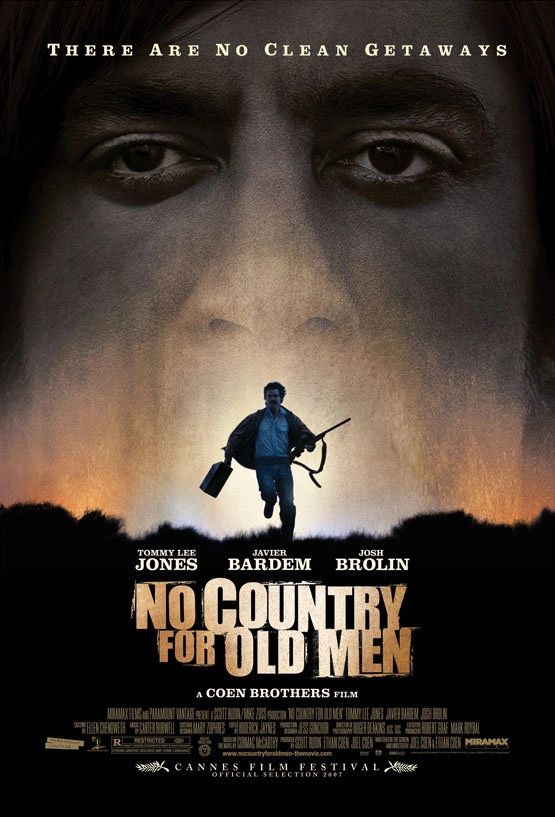
In No Country for Old Men, there is this gas station scene that is basically burned into the brains of anyone who has seen the movie, and for good reason. By the time Anton Chigurh strolls in, we already know he is a psychopath. He has killed a couple people in cold blood before we even hit the twenty minute mark, so the second he starts making small talk with this unsuspecting store clerk, the tension skyrockets. What is genius about the scene is that nothing violent actually happens. Instead, Chigurh slowly turns a normal conversation into a psychological death trap. He asks the guy strange little questions, presses him in ways that feel more like taunts than curiosity, and then out of nowhere, he drops the line: “What is the most you ever lost in a coin toss?” That is the moment the whole movie shifts, because suddenly we are not just watching a killer, we are seeing the code he lives by.
The coin toss is not just a gimmick, it is Chigurh’s entire philosophy in action. He convinces himself he is not deciding whether someone lives or dies, he is simply letting fate handle it. To him, the quarter is not just loose change, it is sacred, a kind of holy object that gives meaning to his cruelty. He even tells the clerk not to put it in his pocket because it would “lose its significance.” That detail makes him terrifying. If he had simply killed the man, he would be scary but predictable. Instead, he becomes something else: a man who believes he is an agent of destiny, bound to a set of rules only he can see. The quarter makes him scarier because it proves he is not random. He is consistent in a way that is almost worse, because you know he will follow through on his twisted system.
That is why every time Chigurh shows up after this, the tension is through the roof. When he gives Llewellyn Moss that bizarre deal—hand yourself over and I will let your wife live—we believe him, because we have already seen how committed he is to his code. When he talks to Carson, you can feel Carson trying to reason around that philosophy, desperately looking for a loophole, and you realize there is not one. Then there is Carla Jean, who becomes the only person in the whole movie to actually call him out. She refuses to flip the coin, tells him the coin has no say, and flat out tells him what no one else will: he is not fate, he is just a man choosing to hurt people. It is the first time someone pokes a hole in the armor of his philosophy, and right after that, fate flips on him in its own way when he gets wrecked in a car accident. He survives, but the moment sticks because it shows he is not untouchable, no matter what he believes.
What makes this scene so brilliant is how it sets up the bigger picture of the film. No Country for Old Men is essentially a showdown of three different philosophies. Sheriff Bell is old school, holding onto the belief that the world used to be better, only to face the fact that violence has always been present. Llewellyn believes in his own smarts and self-reliance, thinking he can walk the gray line and come out ahead, but his confidence becomes his downfall. Chigurh, with his warped devotion to chance, represents the most frightening philosophy of all: one that removes empathy and hides behind ritual. The Coens put these three codes into the same harsh, lawless landscape and let them collide until they break.
That is why the coin toss scene is more than just four minutes of nail biting dialogue. It is the movie laying its cards on the table. It tells us what Chigurh is, how he operates, and why we should be terrified of him even when he is only talking. It gives weight to everything that follows, because once you have seen him bet a man’s life on a quarter, you cannot stop wondering what that philosophy will do to everyone else in the story. That is what makes it unforgettable almost twenty years later. It is not just the suspense or the great acting, it is how a single conversation reveals a character’s entire worldview and, in doing so, locks us into a story where every philosophy is bound to unravel in the face of chaos.