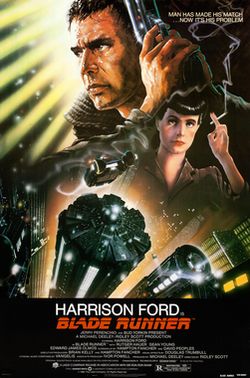
When people look back at the movies of 1982, the titles that dominate the conversation are easy to spot: E.T. enchanted families with heart and wonder, Raiders of the Lost Ark gave audiences a straightforward hero triumphing against evil, and Rocky III delivered the kind of triumphant underdog tale that makes you want to stand and cheer. Then, sitting much further down the box office list at number 29, was Blade Runner. At the time, it seemed like a misfire. Critics were lukewarm, audiences were confused, and the movie was considered a disappointment. Yet the very qualities that made it struggle in 1982 are the same ones that have turned it into a cultural touchstone, a film that reshaped science fiction and influenced countless directors who came after.
Blade Runner isn’t a popcorn adventure. It’s built like a classic noir from the 1940s: a weary detective with blurred morals, a mysterious woman whose motives complicate things, a city soaked in shadows and rain. But Ridley Scott fused those noir staples with a futuristic dystopia of towering skyscrapers, neon signs, and decaying streets. The result was something new—what we now call “neon noir” and “cyberpunk.” These genres thrive on the tension between high technology and societal rot, between corporate power and individual humanity. At the time, though, mainstream audiences weren’t ready for it.
Science fiction has always been the genre that asks tough questions rather than handing out easy answers. Horror wants to scare us, comedy wants to make us laugh, action wants to thrill us. Sci-fi often wants us to sit uncomfortably and think. Blade Runner certainly did, and it didn’t make things easy for the audience. Its world is dense, its morality is messy, and even the studio worried viewers would get lost—hence the awkward voiceover narration in the original cut, something neither Ridley Scott nor Harrison Ford wanted. Over time, multiple versions of the film were released, with Scott’s “Final Cut” now seen as the definitive one. That persistence says a lot: this was a movie that demanded patience, both from its creators and its fans.
At its core, Blade Runner is about what makes us human. Deckard, the blade runner tasked with “retiring” replicants, hunts beings that are indistinguishable from humans except for the fact that they were manufactured. They were built for labor, designed with short lifespans, and treated as property. Yet they think, feel, and even fear death. The story keeps pressing the viewer to reconsider who the real villains are. The replicants rebel simply because they want to live. Deckard carries out executions under the banner of law and order, but his own sense of morality begins to crumble. The famous rooftop scene—Roy Batty saving Deckard’s life and mourning the loss of his memories “like tears in rain”—is one of the most human moments in cinema, and it comes from a character the world insists isn’t human at all.
Not everything in the film holds up. The scene between Deckard and Rachael in his apartment, staged with the trappings of romance but playing out with clear aggression, is deeply unsettling today. It reflects a tired Hollywood trope where male forcefulness was equated with passion, a perspective born from a lack of female voices behind the camera. Some argue it fits the story—Deckard, after all, spends most of the movie treating replicants as less than human. But the scene also reveals the blind spots of the era. If we want to appreciate Blade Runner as the groundbreaking piece of art it is, we also need to acknowledge the parts that have aged poorly and recognize the cultural baggage they carry.
The lasting power of Blade Runner comes from its refusal to give us neat answers. Is Deckard himself a replicant? Does it matter? Are the questions about corporate power, environmental collapse, and artificial intelligence warnings about our own future? Probably yes to all. But more than anything, Blade Runner endures because it shows that memory, emotion, and the desire to live are universal experiences. Human or replicant, we all fear being forgotten. We all want our lives to matter.
When it first came out, Blade Runner was easy to dismiss. Today, it stands as a cornerstone of modern sci-fi, a film that reshaped not just its genre but the way we think about identity, morality, and what it means to be alive. For me, the most powerful takeaway is that labels—human, replicant, real, artificial—become meaningless when confronted with genuine feeling. Deckard’s decision to leave with Rachael at the end feels less like a twist and more like an acceptance: that survival, empathy, and love are what define life.